What Is the Main Message of Bhagavad Gita?
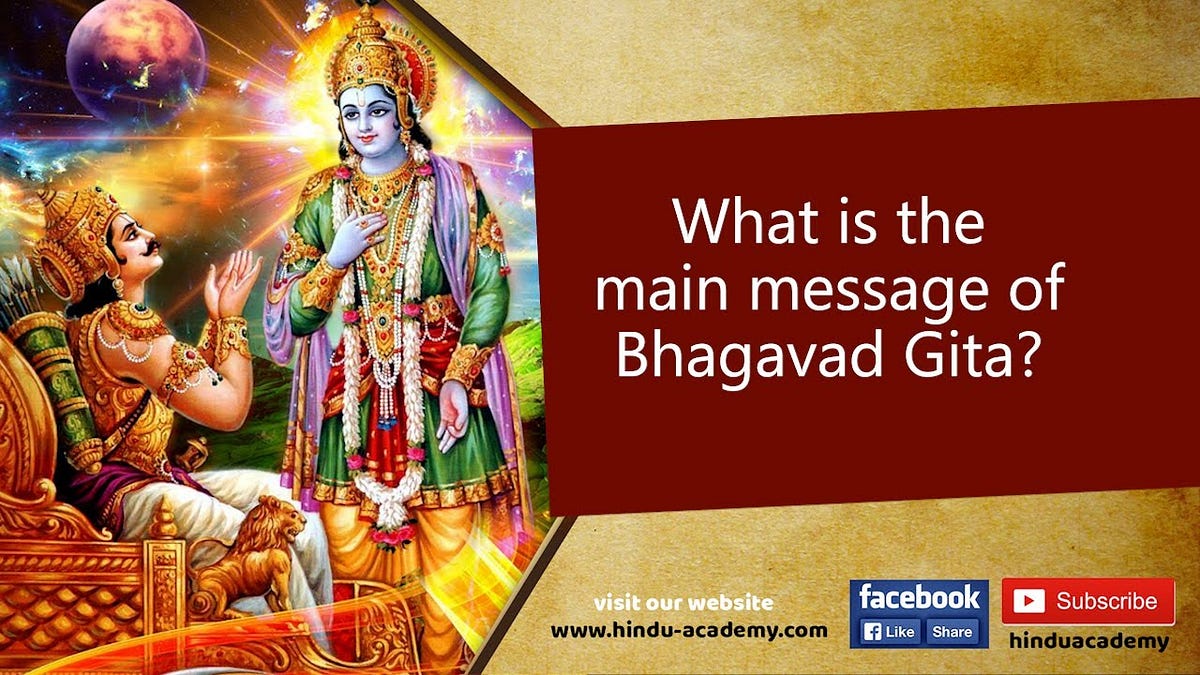
In the Bhagavad Gita, verses 17 and 26 highlight the nature of duty and action. Shri Krishna suggests that the liberated soul has no duty, as they are content in themselves. However, even though they don’t have any personal obligation, they continue to work out of compassion, not necessity.
Acharya Prashant explains this distinction by comparing the liberated one to the common person. The common person performs duties as a form of punishment because they are bound by their desires and attachments. In contrast, the liberated soul takes on duties voluntarily, out of compassion and selflessness, not for any personal gain or reason. This is evident in figures like Buddha, Mahavira, and Kabir, who work tirelessly not to fulfill a desire but simply because they cannot help it. They act naturally, without any intention or self-interest, much like a blooming flower spreading fragrance.
Krishna himself is the prime example of this. Though he has no obligations, he continues to act, not out of duty, but because it is his nature. The liberated one is beyond the concepts of duty and religion — they simply act, expressing their innate essence, much like Krishna who is both beyond religion and a manifestation of it.
The key point is that while ordinary people perform actions with a cause — either to fulfill desires or to attain liberation — the realized being works without a cause, driven solely by compassion and naturalness. Liberation is not something external that happens to someone; it is an intrinsic state of being.


Comments
Post a Comment